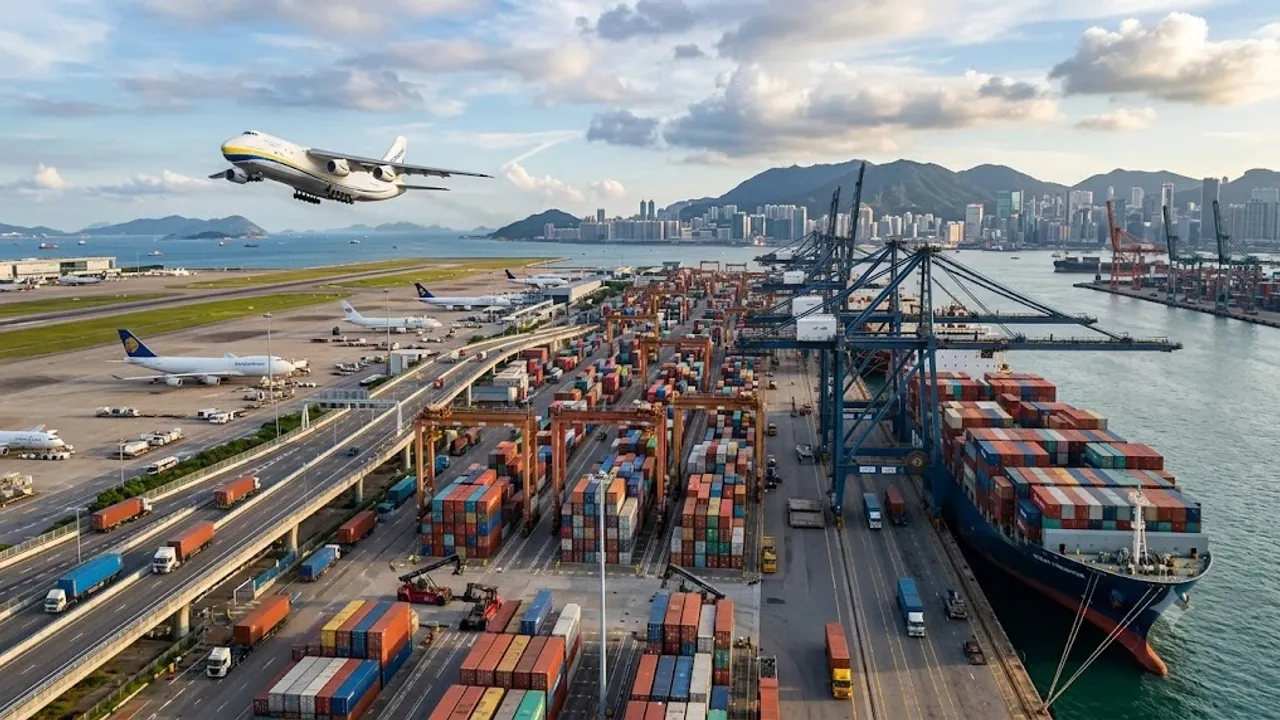

The world of logistics in 2026 is defined by a single, overarching reality: disruption is no longer an exception; it is the permanent state of operations. The industry has moved past the era of just-in-time efficiency, forging a new path defined by resilience, artificial intelligence, and a fundamentally altered geopolitical landscape. This transformation is not an incremental adjustment but a complete overhaul of how goods move across the globe.
1. The New Reality: Structural Volatility
For years, supply chain professionals managed temporary shocks. Today, the shocks have become structural. According to the 2026 State of Logistics Report, "the disruptions reshaping logistics are no longer temporary, but structural—and geopolitics is the primary engine driving that shift." Trade policy has become wildly unpredictable, with tariff changes averaging every 1.5 weeks in 2025, forcing companies to abandon long-held strategies in favor of constant, reactive adjustments. This has led to a concept called "network drift," where companies accumulate incoherent adjustments made without a strategic plan.
A powerful example of this new volatility is the crisis unfolding in Ukraine's Black Sea ports. Intensified Russian attacks have led shipowners to halt vessel arrivals, significantly disrupting grain exports and threatening global food supplies. Ukraine, a major global grain supplier, has lost about a third of its export capacity, with traders struggling with logistics headaches and rising freight rates. This event is not just a regional crisis; it is a stark demonstration of how geopolitical risk now has an immediate and severe impact on global logistics networks.
2. The AI Revolution: From Potential to Proof
The most significant technological shift in 2026 is the maturation of artificial intelligence. After years of pilots, AI has moved from potential to proof, delivering measurable returns in specific supply chain applications. Gartner's top supply chain technology trends for 2026 highlight the emergence of "Agentic AI"—AI systems that can plan, act, and adapt to achieve goals independently. This is evolving into "Collaborative Multiagent Systems," where multiple specialized AI agents work together to automate complex, multi-step processes.
However, AI adoption is sharply uneven. A "gap between AI leaders and laggards is widening fast," according to industry analysts. Companies that have embedded AI into core workflows are generating compounding returns, while those still constrained by legacy systems are falling further behind. The priority is shifting toward high-value workflows like demand forecasting and exception management, where AI's impact is most defensible. The demand for AI skills in the supply chain has surged by 387% since 2023, underscoring the scramble for talent to manage this new frontier.
3. Infrastructure and Investment: Building for the Future
While AI drives the digital transformation, physical infrastructure is also evolving to meet new demands. The global contract logistics market is proving resilient, forecast to grow to €318.58 billion in 2026. Much of this growth is driven by strategic investments in key regions.
For instance, DHL Supply Chain is breaking ground on a new logistics campus in Vietnam's dynamic manufacturing corridor. The facility is designed with automation-ready capabilities and rooftop solar panels, showing how new infrastructure is being built from the ground up to be sustainable and future-proof. At the same time, the industry is bracing for a massive influx of ocean shipping capacity (a 3.7% increase in 2026), which could further complicate market dynamics.
4. The Human Element and Market Bifurcation
Despite the rise of automation, the human element remains critical. The "State of Logistics 2026" report notes that competitive advantage is migrating from network ownership to "adaptive intelligence," the ability of an organization to sense changes, make better decisions, and reconfigure resources faster than competitors.
The market has become deeply bifurcated. Managing to averages is now a strategic liability. For example, the truckload market is recovering, but "recovery is concentrated in specific lanes while overcapacity persists in others." Shippers are prioritizing reliable capacity and carrier survivability over rock-bottom rates, recognizing that choosing the cheapest option today could mean a carrier bankruptcy tomorrow.

Stay Informed
In a world where the landscape changes by the hour, staying current is no longer a luxury but a necessity. For the most up-to-date information, industry analysis, and breaking news, professionals turn to dedicated sources that track these rapid changes. That is why you should regularly follow supply chain news today on the specialized portal k2cargo.news — where daily updates, market analysis, and operational reports on global supply chains are published.
Conclusion
The logistics industry of 2026 is a world of extremes: extreme volatility, extreme technological advancement, and extreme competition. The companies that will thrive are not those that simply move goods but those that can intelligently navigate a world of constant flux, turning disruption into a strategic advantage.