
International academic exchange increasingly demands verified multilingual capabilities, pushing standardized language tests toward highly rigorous evaluation frameworks. Candidates often struggle when test structures shift from basic vocabulary memorization to complex applied communication. Relying strictly on isolated flashcards or passive reading strategies causes severe timing issues, failing to build the cognitive stamina essential for prolonged linguistic processing.
Textbook reviews rarely mirror the intense cognitive load and strict pacing of authentic exam environments. Test-takers require dynamic evaluation methods to identify specific skill gaps early. Integrating simulation tools into a routine provides essential diagnostic feedback to recalibrate learning priorities. Utilizing assessment platforms like HSKWin offers a practical pathway to align proficiency with updated grading standards. This shift transforms passive review into active reinforcement, ensuring learners allocate study hours toward tasks that yield the highest improvements.
Identifying Core Competencies in Modern Assessment Frameworks
Modernized language proficiency examinations have shifted away from isolated grammar translation toward integrated communicative competence. This evolution requires candidates to process information across multiple modalities simultaneously, such as listening to dialogues and reading passages to synthesize responses. A crucial first step involves mapping the structural changes of the target exam, noting the exact ratios of all tested components.
Candidates must systematically analyze grading rubrics to understand how distinct competencies are weighted. Advanced tiers frequently introduce complex translation tasks and culturally nuanced reading passages demanding more than literal comprehension. Identifying these high-value sections allows learners to prioritize daily study materials effectively. Rather than dividing time equally, individuals can focus on domain-specific vocabulary and complex sentence structures appearing in heavily weighted exam sections.
Understanding the specific pacing requirements of each segment is essential for developing effective test-taking mechanics. Learners frequently underestimate the mental fatigue associated with processing foreign syntax under strict constraints. By breaking the exam into discrete competencies, candidates can establish clear goals for practice sessions, ensuring targeted improvement without succumbing to generalized study fatigue.
Building a Responsive Routine for Language Acquisition
Establishing a preparation framework requires isolating distinct cognitive tasks to prevent overload, ensuring consistent forward momentum throughout the study cycle.
- Establish Baseline Metrics Through Initial Diagnostics
Before dedicating months to a curriculum, learners must determine their exact starting point across all language domains. Conducting a diagnostic assessment without prior preparation reveals raw capabilities and highlights immediate weaknesses. This baseline should consist of a full-length, timed examination from a previous testing cycle. Documenting question types that yield the lowest accuracy rates directly informs the structure of the upcoming study schedule.
2. Isolate Weaknesses in Cross-Sectional Language Skills
Once baseline metrics are established, candidates must dissect their performance to separate superficial errors from fundamental misunderstandings. If reading scores are low, learners must investigate whether the issue stems from inadequate vocabulary, complex grammatical clauses, or poor time management. Isolating these causes allows for targeted corrective exercises. If syntax parsing is the bottleneck, study blocks should prioritize sentence diagramming over broad reading.

3. Implement Spaced Repetition for High-Frequency Vocabulary
Advanced standardized exams test a precise understanding of specialized terminology across diverse contexts. Integrating a spaced repetition system ensures that newly acquired vocabulary transitions efficiently from short-term memory to active recall. Candidates should construct customized review decks grouping words by semantic fields relevant to the syllabus. Consistently reviewing these items at increasing intervals prevents knowledge decay during high-pressure tasks.
4. Simulate Authentic Testing Environments for Time Management
Acquiring knowledge is distinct from demonstrating it within a strictly enforced timeframe. Weekly routines must include sessions that replicate the environmental conditions of the official test center. This means silencing notifications, adhering to rigid section timers, and utilizing exact formatting structures. Regularly experiencing these pressures conditions candidates to manage test anxiety and develop efficient pacing strategies.
Evaluating Progress Through Structured Trial Examinations
Periodic evaluation is necessary to verify that study routines are producing measurable improvements in target competencies. Relying entirely on localized practice exercises creates a false sense of security, as isolated tasks do not require the mental endurance demanded by a multi-hour assessment. Transitioning from theoretical study to applied performance requires tools that mirror the updated formatting and difficulty scaling of the certification.
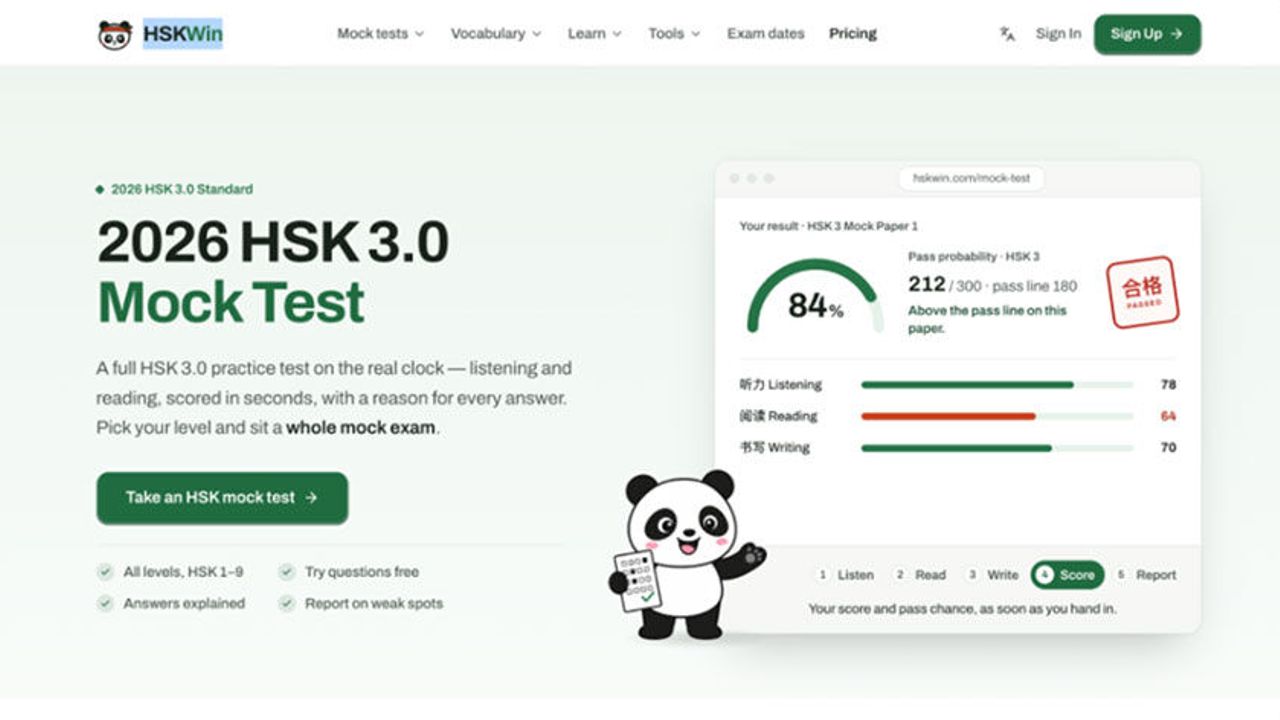
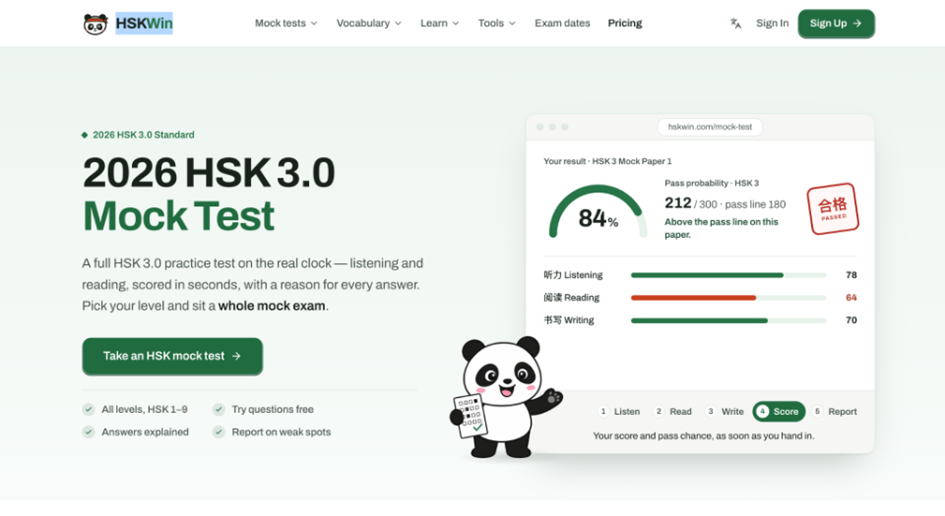
When candidates navigate transitions to modernized standards, completing a full-length HSK 3.0 Mock Test provides a realistic environment to gauge readiness. The user inputs their target certification level, engages directly with timed listening, reading, and writing modules matching that tier, and submits responses for automated grading. Upon reviewing the diagnostic breakdown, candidates must cross-reference their accuracies against baseline goals to decide which grammatical structures or vocabulary categories demand immediate remediation.
This granular performance data dictates the exact adjustments necessary for the next preparation phase. If evaluation indicates a drop in listening accuracy during final audio segments, candidates must incorporate longer auditory practice files to build cognitive endurance. Continuous iteration based on objective trial data is the most reliable method to guarantee peak performance on the examination date.
Maintaining Long-Term Consistency in Skill Development
Achieving a high percentile score on a rigorous standardized language assessment depends on applying targeted diagnostics and responsive study adjustments. Identifying structural vulnerabilities early prevents ineffective habits and ensures every practice hour targets competencies critical for success. By meticulously analyzing error patterns, isolating linguistic weaknesses, and enforcing strict timing constraints during regular simulations, learners build the resilience necessary to navigate complex multi-modal language tasks seamlessly.
Mastering a foreign language for advanced certification extends beyond mere memorization, requiring continuous refinement of practical communication faculties under pressure. Building a sustainable preparation framework guarantees candidates pass immediate regulatory hurdles while developing the structural linguistic competence required for academic or professional environments. Maintaining this structured, data-driven approach establishes a robust foundation for lifelong language mastery and cross-cultural communication.